

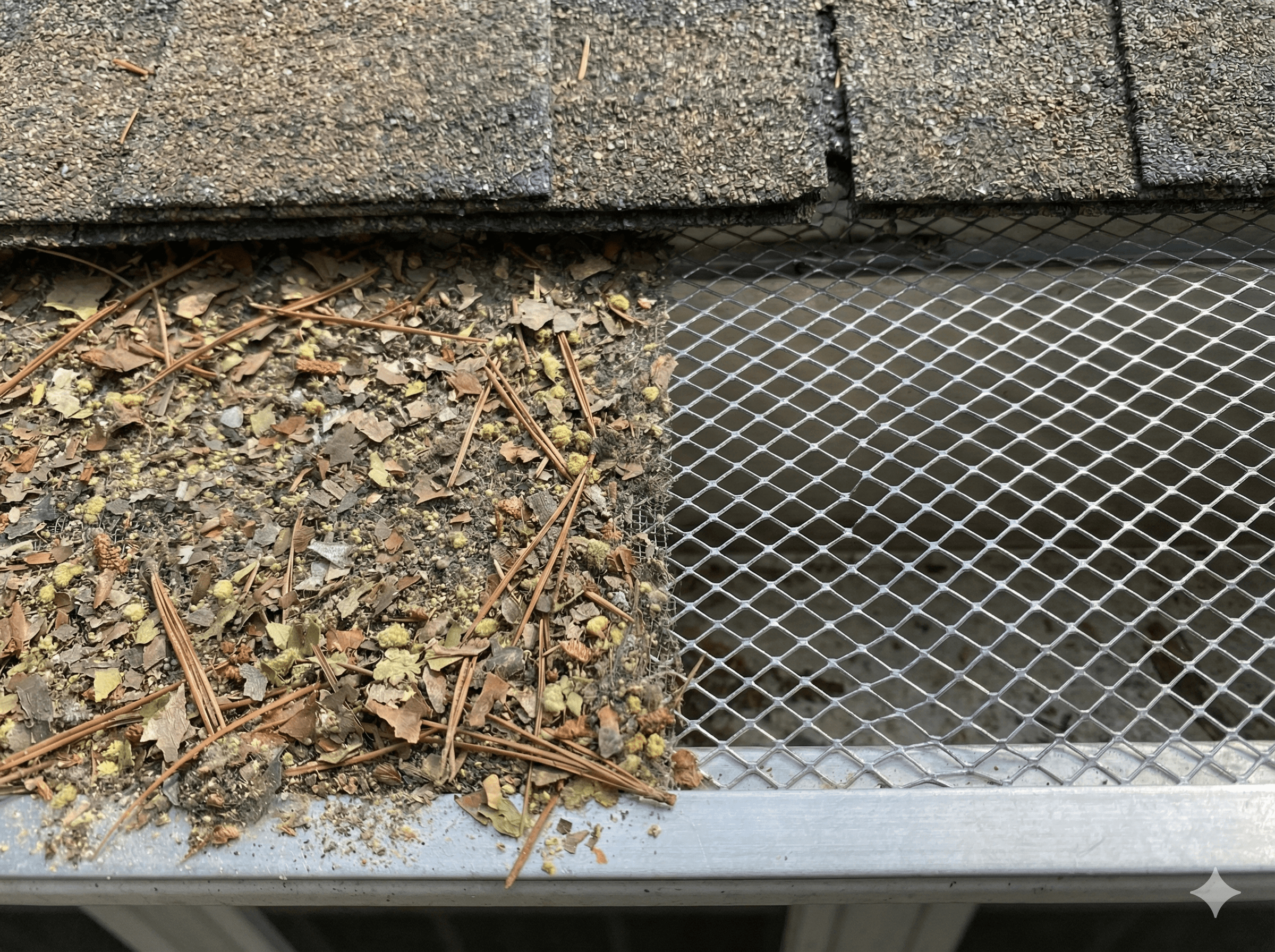
Gutter guards reduce your maintenance needs but still collect debris over time. We service guards without full removal in most cases. Our technicians clean surfaces, make minor adjustments, and identify issues before they cause damage. Regular service extends guard life and protects your Folsom home investment. Learn more about our gutter cleaning services.
Many Folsom homeowners install gutter guards expecting zero maintenance. Guards reduce how often you need service, but they still collect debris. Small particles slip through mesh openings and settle beneath the surface. Acorns, leaf fragments, and dust build up on top of screens over time. This blocks water flow even when the system underneath stays clear.
Valley oak trees drop acorns and leaf pieces from October through December. These fragments sit on guard surfaces and prevent proper drainage. Winter rains carry clay soil runoff from your roof onto mesh systems. The sediment creates a layer that restricts water intake during storms.
We clean guard surfaces without removing the entire system. Our technicians clear accumulated debris and flush small particles from mesh openings. You get restored water flow and maintained protection without the labor cost of full guard removal.
Acorns wedge between mesh openings while tannin residue bonds dust to surfaces. Pine needles slip through gaps as winter storms test capacity. We restore both drainage performance and surface condition.
Properties from Empire Ranch to Willow Creek rely on our service. We clear buildup and flush mesh without damaging fasteners. Your system drains at full capacity after we finish.
Oak debris and clay soil create conditions most companies mishandle. We use manufacturer-approved methods and warranty-safe techniques. You get restored flow and preserved investment coverage.
Folsom properties near mature trees experience faster debris buildup than homes in open areas. Valley oaks and pines create specific problems that many guard manufacturers do not account for. Understanding these local debris types helps you plan maintenance schedules and avoid overflow surprises.
Valley oak leaves contain tannins that leave sticky residue on guard surfaces. This residue acts like glue for dust, pollen, and small leaf fragments. Even light debris accumulation bonds to the sticky coating and restricts water flow. The problem worsens during fall when oak leaves break down into smaller pieces.
Pine needles from foothill areas slide between certain mesh guard types. Despite manufacturer claims about needle protection, some systems allow needles to slip through gaps. The needles collect beneath the guard surface and block water channels. Properties near Folsom Lake with mixed oak and pine coverage face both challenges at once.
Regular professional cleaning addresses these unique Folsom conditions. We remove sticky residue and extract needles that bypass guard openings. This prevents the surprise overflow issues that catch many homeowners off guard during winter storms.
Professional maintenance restores flow and catches problems before storms arrive.
Tell us about your property. We provide clear pricing based on your guard type and debris conditions.
Choose a time that fits your schedule. We handle surface cleaning and adjustments in one visit.
Water flows freely through restored mesh. Your system handles Folsom storms without overflow issues.
Most gutter guard warranties require professional maintenance documentation to remain valid. DIY cleaning attempts can void coverage if you damage fasteners or guard surfaces. Many Folsom homeowners discover this requirement only after filing a warranty claim. Professional service protects both your investment and your coverage.
Our certified technicians use approved cleaning methods that guard manufacturers accept. We clean surfaces without loosening fasteners or stressing attachment points. You get thorough debris removal while maintaining warranty validity. We provide service documentation you can submit with any future warranty claims.
Clay tile and composite roofs common in Folsom require specialized access techniques. Walking on these roof types without proper equipment damages tiles and voids roof warranties. Our team uses appropriate ladder placement and roof protection methods. We access your guards safely without creating additional repair needs.
Many homeowners attempt guard cleaning from ladders without realizing the safety risks. Heights, unstable positioning, and roof edges create dangerous conditions. Professional service eliminates these risks while ensuring complete cleaning. You avoid personal injury and potential property damage from falls or improper equipment use.
Folsom wind storms in February and March lift guard edges at roof valley transitions. Loose sections allow debris entry and reduce system performance. Our technicians identify these issues during cleaning visits and re-secure fasteners on the spot. You get both cleaning and repairs in a single appointment.
Home settling on expansive clay soil shifts gutter attachment points over time. This process takes three to five years but eventually affects guard positioning. Sections that sag or separate from the gutter allow water to pour over edges. Prairie Oaks and similar Folsom neighborhoods with clay soil experience this settling pattern.
We adjust guard pitch and tighten fasteners to restore proper alignment. Small corrections now prevent major repairs later. Most adjustments take minutes and require no additional parts. You avoid separate service calls and extended water damage from misaligned guards.
Winter storm damage often goes unnoticed until the next heavy rain. Loose edges or shifted sections create overflow problems during storms. Our inspection during cleaning catches these issues before they cause fascia rot or foundation damage.

Scheduled guard maintenance in late September prepares your system for Folsom’s rainy season. Our distinct wet winter and dry summer pattern creates an ideal service window. Guards cleaned before storms arrive handle heavy rainfall without overflow issues. You avoid emergency calls during winter when rain exposes problems too late.
Small issues caught during annual service prevent expensive repairs later. A loose fastener fixed in September stops water from pouring behind fascia boards all winter. Foundation damage from one season of gutter overflow costs thousands to repair. Professional guard maintenance for several years costs less than fixing one major water damage issue.
Properties near the American River face higher moisture exposure that accelerates guard wear. Damp conditions from river proximity promote faster organic growth on guard surfaces. Annual cleaning removes this growth before it restricts water flow and damages the guard material itself.
Preventive maintenance extends the functional life of your guard investment. Guards that receive annual service last longer than neglected systems. You protect both the guards themselves and the home components they were installed to defend.
Leaves and twigs resting on guard surfaces look harmless but block significant water flow. Surface debris prevents 40 percent of water intake even when the mesh underneath stays completely clear. A quick surface cleaning restores full capacity without time-consuming disassembly work.
Dry oak leaves accumulating on guards during Folsom summer months create fire hazards. Red Flag Warning days bring high winds that can ignite dried organic material. Properties in oak-heavy neighborhoods face elevated risk when guards hold months of dry leaf buildup. Simple debris removal eliminates this fire threat before dangerous conditions arrive.
Our surface cleaning service takes minutes per section but provides immediate results. We clear visible debris, test water flow, and verify proper drainage. You see instant improvement in how water enters your gutter system. The service prevents small buildup from becoming major clogs during fall leaf drop.
Regular surface maintenance between full cleanings extends time between professional visits. Many Folsom homes benefit from spring surface cleaning and fall deep cleaning. This schedule addresses both fire season debris and winter storm preparation needs.
Yes, September or early October service ensures your guards handle winter storms effectively. Cleaning before the first heavy rains removes summer debris buildup and prepares your system for peak water flow. Guards cleaned in late September through December drain properly when January storms arrive. Waiting until after storms begin often means discovering overflow problems too late to prevent damage.
Most systems allow in-place cleaning that maintains fastener integrity and warranty coverage. Our technicians remove surface debris and flush mesh openings without loosening attachment points. Complete guard removal becomes necessary only when debris has worked deep beneath the system. In-place cleaning costs less and protects your warranty better than full removal and reinstallation.
Visible sagging, water overflow during rain, or loose edges indicate adjustment needs during your service visit. Our technicians inspect guard positioning while cleaning and identify sections that need re-securing. Most adjustments happen during the same appointment at no extra charge. Properties in areas with expansive clay soil benefit from inspection every service visit.
Yes, guards still reduce cleaning frequency from three to four times yearly to once annually. Homes without guards in oak neighborhoods need service after every major leaf drop. Guards catch most debris on the surface where cleaning takes minutes instead of hours. The time and cost savings justify annual professional maintenance even in heavily treed areas.
Surface debris removal, mesh cleaning, fastener inspection, minor pitch adjustments, and downspout flow testing. We clear all visible debris from guard surfaces and flush small particles from mesh openings. Our technicians check fastener tightness and adjust any sections showing sag or separation. We test downspout flow to verify complete drainage before finishing the service.
Yes, post-storm inspection catches lifted sections before water damage occurs during the next rainfall. Wind events in February and March often lift guard edges at roof valleys and transitions. A quick inspection identifies problems while repairs stay simple and inexpensive. Waiting until the next storm exposes damage can mean water pouring behind fascia boards all season.