

Should Folsom homeowners wait until every oak leaf drops before scheduling fall gutter cleaning, or is there a smarter approach? The answer affects both your wallet and your home’s protection heading into rain season. Between late September and early January, Folsom’s Valley Oaks, sycamores, and ornamental trees drop thousands of pounds of leaves across residential properties. For gutters, this creates a challenge. Clean too early and you need service again. Wait too long and late January’s storms hit clogged gutters.
This guide explains exactly when to schedule fall gutter cleaning in Folsom, what the service should include, and how to protect your home heading into Folsom’s late January through April rain season without overpaying for multiple cleanings. We cover optimal timing strategies based on Folsom’s tree species and weather patterns. You learn what professional fall cleaning includes beyond basic debris removal. We provide realistic cost expectations. You see why seasonal gutter cleaning service prevents expensive damage year-round.
When should I schedule fall gutter cleaning in Folsom CA?
Schedule fall gutter cleaning in Folsom between mid-November and early January for optimal results. This timing catches 80-90% of leaf drop from Valley Oaks and sycamores while positioning your gutters ahead of late January through April’s heaviest rainfall period. Most Folsom homes only need one fall cleaning if scheduled during this window. Properties with heavy oak coverage near the American River corridor may benefit from a late-October inspection followed by final cleaning in December. Professional service takes 1-2 hours and includes debris removal, downspout flushing, and inspection for damage before winter storms arrive.
Need a professional inspection? Call (916) 404-0288 or request your free quote for gutter cleaning in Folsom.
The Best Time for Fall Gutter Cleaning in Folsom (By Tree Type)
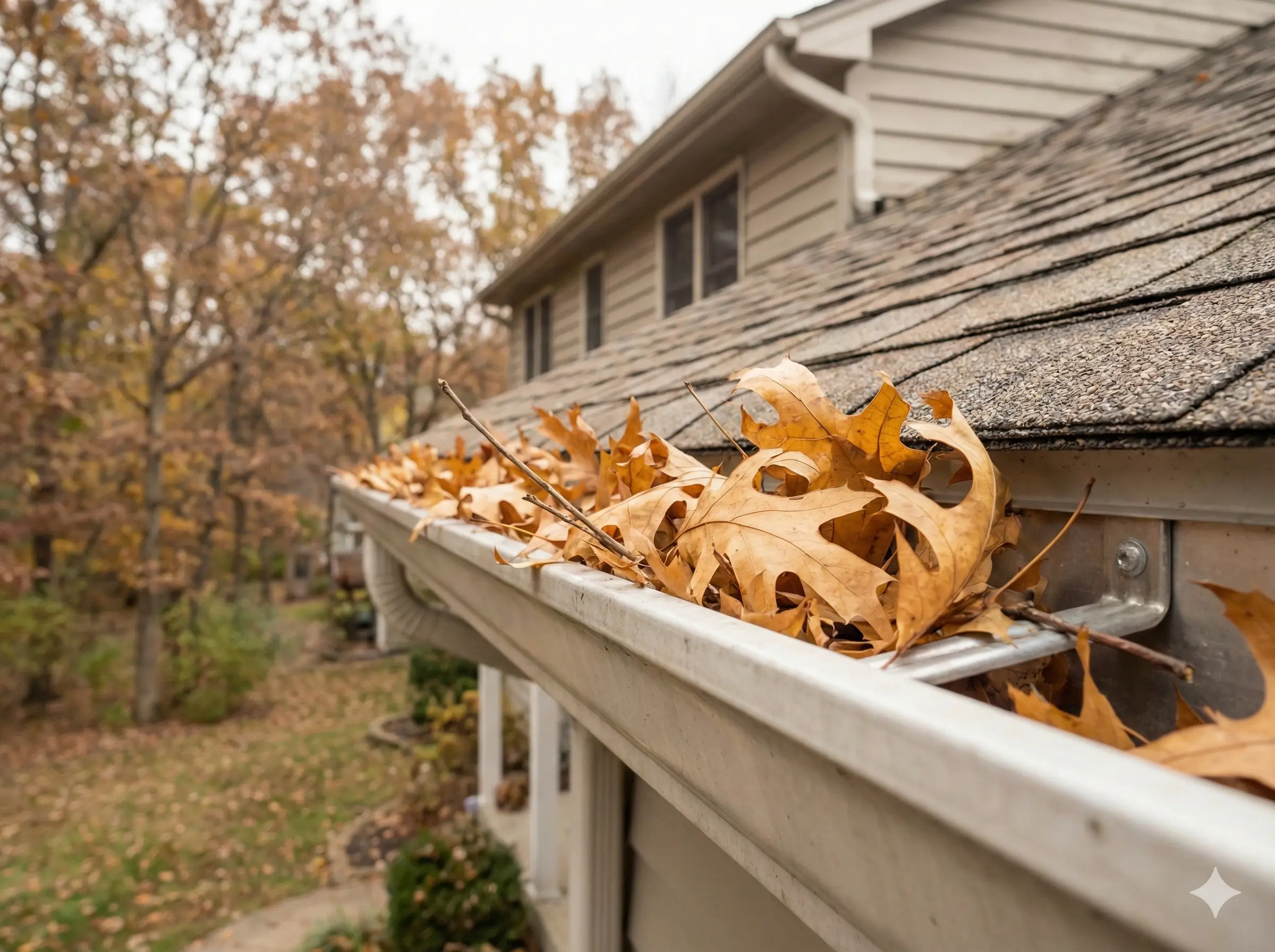
Folsom’s tree species drop leaves on different schedules. Valley Oaks begin their heaviest leaf drop in late October. This continues through mid November. Chinese Pistache trees follow during November. Their bright red leaves add to gutter debris through Thanksgiving. Ornamental maples hold their leaves until early December. Sycamores extend the leaf season furthest, dropping into late December. The UC Davis Arboretum notes that Northern California tree species shed on staggered schedules, with oaks, pistache, maples, and sycamores each entering their drop cycle at different times in the fall.
This staggered leaf drop creates your scheduling window. Most Folsom homes with moderate tree coverage need one cleaning between mid-November and late December. You catch the majority of Valley Oak leaves. You also get the later-dropping species before January rains arrive. Properties with light tree coverage can wait until early December. This single service handles the full season.
Heavy oak coverage changes the strategy. Homes near the American River corridor face more organic debris. Humidity in these areas encourages faster decomposition in gutters. Properties surrounded by mature Valley Oaks may benefit from a two-step approach. We inspect gutters in late October to check capacity. We return for final cleaning in late November or early December. This prevents overflow during early winter storms while avoiding multiple full cleanings.
Historic Folsom district homes often have older gutter systems. These systems may have reduced capacity from years of use. Brackets can loosen over time. Seams separate slightly. We recommend earlier inspection for these properties. A late October check identifies any repairs needed before leaf season peaks. This protects your home better than waiting until gutters fill completely.
Your specific timing depends on your property’s tree density and location. A home in Folsom Ranch with minimal landscaping needs different timing than a property in Oakmont surrounded by mature trees. We evaluate your situation and recommend the schedule that protects your home without unnecessary extra service.
What Professional Fall Gutter Cleaning Includes in Folsom
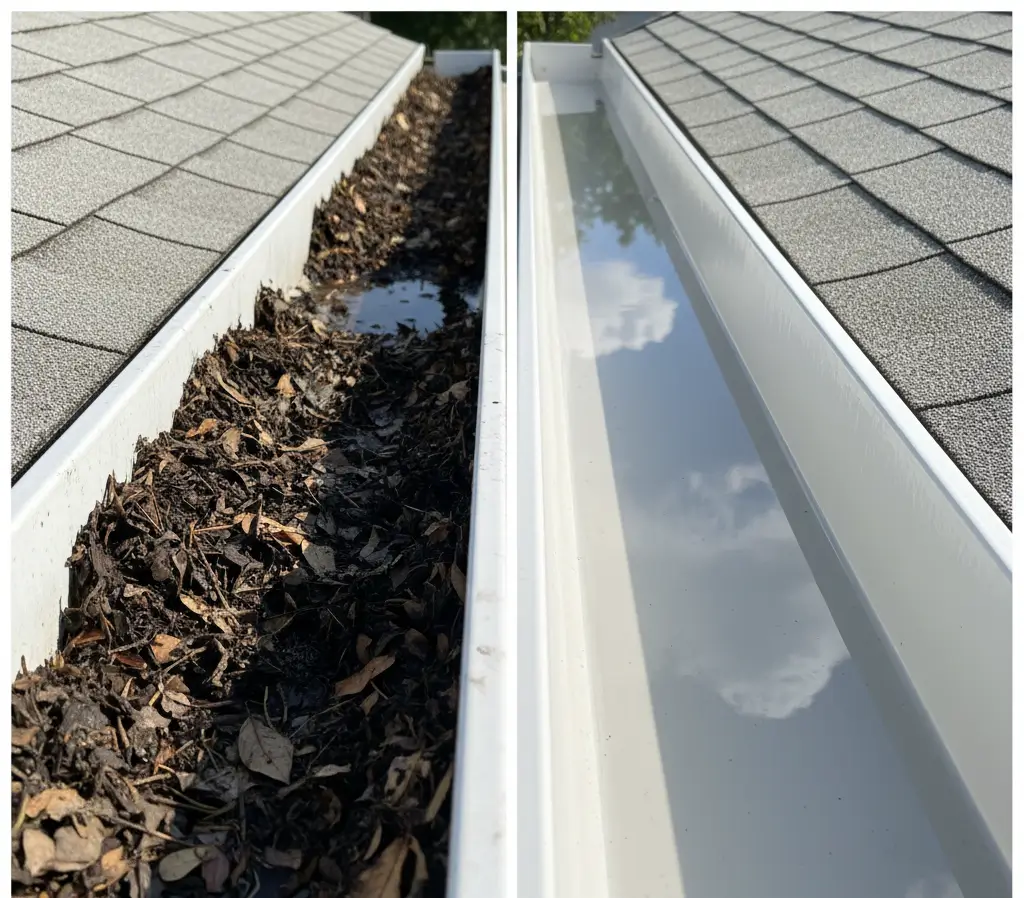
Professional fall gutter cleaning goes beyond pulling visible leaves from channels. Complete debris removal addresses the full gutter system. We remove leaves, acorns, twigs, and seed pods by hand. Valley Oak debris includes heavy acorns that settle at the bottom of gutter channels. Sycamore seed balls break apart and pack into corners. We clear roof valleys where leaves accumulate before washing into gutters. This prevents future blockages after the first rain.
Downspout flushing separates professional service from basic cleaning. We run water through every downspout to verify proper flow. Sediment settles at the bottom of downspouts during dry months. This sediment packs tighter when the first rain hits. A downspout that looks clear from the outside can be partially blocked inside. We clear this sediment before it causes problems. Water pressure testing confirms each downspout drains completely.
Gutter pitch affects drainage speed. Gutters need a quarter-inch slope for every 10 feet of run toward downspouts. Over time, brackets loosen and gutters sag. Standing water appears in low spots. We verify pitch during cleaning and note any sections that need adjustment. This prevents water from pooling in your gutters between storms.
Pre-rain season inspection catches small problems before they become expensive repairs. We check every bracket and hanger for secure attachment. We look for separating seams at corners and joints. We identify rust spots or corrosion on older aluminum systems. We examine downspout elbows for cracks or damage. Finding these issues in November gives you time to address them before January storms test your system.
Debris disposal completes the service. We bag all debris as green waste during cleaning. Nothing gets dumped in your landscaping or left on your driveway. Standard Folsom service includes hauling debris away. You don’t handle cleanup after we finish. Your property looks clean when we leave.
Fall Gutter Cleaning Cost in Folsom: What to Expect
Typical single-story home gutter cleaning in Folsom ranges from $150 to $250 for most properties. Two-story homes generally cost $225 to $400 depending on total linear feet and access difficulty. These ranges cover complete service including debris removal, downspout flushing, and basic inspection. Your actual cost depends on several property-specific factors.
Linear footage drives base pricing. A ranch-style home with 120 linear feet of gutters costs less than a two-story home with 180 linear feet. We measure total gutter length to calculate your quote. This ensures accurate pricing before we start work.
Home height affects labor time and equipment needs. Single-story homes take less time and use standard ladders. Two-story properties require extension ladders and more careful positioning. We add safety protocols for steep-pitch roofs common in newer Folsom developments. These factors increase service time and cost.
Tree overhang density changes debris volume. A home surrounded by mature Valley Oaks has significantly more debris than a property with minimal landscaping. Heavy debris requires more time for thorough cleaning. We account for this when providing quotes. Properties near Folsom Lake or the American River corridor typically have denser tree coverage.
Gutter guard presence affects cleaning methods. Some gutter guard systems still allow debris buildup underneath. Cleaning these systems takes additional time to lift guards and clean properly. We adjust pricing based on your specific gutter guard type.
Fall pricing during October through December reflects peak demand. Most Folsom homeowners schedule gutter cleaning during this window before rain season. You may see slightly higher rates compared to summer months. Scheduling early in the season sometimes offers better availability and pricing.
The value calculation favors professional service. Consider the time investment. Complete gutter cleaning takes you 3-5 hours for a single-story home. Professional crews finish in 1.5 hours. You avoid ladder purchase or rental costs ranging from $150 to $400. You eliminate safety risks that could result in injury. You get thorough downspout flushing that DIY efforts often miss.
Multiple-service bundling provides additional value. Many Folsom homeowners combine fall gutter cleaning with other seasonal maintenance. Pairing gutter cleaning with pressure washing saves on service call fees. Adding solar panel cleaning in the same visit maximizes efficiency. We offer package pricing for combined services scheduled together.

DIY vs Professional Fall Gutter Cleaning: Safety and Effectiveness
Ladder-related injuries send thousands of homeowners to emergency rooms each year. The Consumer Product Safety Commission reports over 160,000 ladder injuries annually treated in U.S. emergency departments. Many occur during home maintenance tasks like gutter cleaning. Extension ladders require proper setup, secure footing, and constant awareness. Two-story homes and steep-pitch roofs increase risk significantly.
Folsom subdivisions present specific challenges for DIY gutter cleaning. Empire Ranch and Folsom Ranch developments feature two-story homes with 25 to 30-foot gutter heights. Steep roof pitches common in newer construction make ladder positioning difficult. Side yards between homes create narrow access points. You need longer ladders and careful maneuvering in tight spaces. One misstep on a ladder can result in serious injury or worse.
Required equipment for thorough DIY cleaning adds up quickly. You need a quality extension ladder rated for your weight plus equipment. This costs $150 to $400 for proper commercial-grade ladders. Add a gutter scoop for debris removal. Include a bucket hook system to collect debris as you work. You need a leaf blower to clear roof valleys before debris washes down. A garden hose with pressure nozzle flushes downspouts. Safety equipment includes work gloves and eye protection. Most homeowners don’t have this full equipment set readily available.
Time investment for DIY gutter cleaning exceeds most estimates. Realistic expectations for thorough single-story cleaning run 3 to 5 hours. This includes ladder setup and repositioning, hand-removal of all debris, roof valley clearing, and downspout flushing. Two-story homes take 6 to 8 hours for complete cleaning. Professional crews finish the same single-story home in 1.5 hours. We use specialized equipment and practiced efficiency. Two-story properties take 2 to 3 hours for our teams.
Quality outcomes differ between DIY and professional service. Hand-removal gets visible debris from gutter channels. Water flushing addresses hidden problems. Downspouts often contain packed sediment not visible from the outside. This sediment blocks water flow during heavy rain. Professional service includes pressure testing every downspout. We verify complete drainage before leaving. DIY efforts typically skip this step because homeowners don’t realize the problem exists.
Structural inspection catches problems early. We examine brackets, hangers, seams, and downspout connections during every cleaning. Loose brackets identified in November can be tightened before January storms. Separating seams get flagged for repair. DIY cleaning focuses on debris removal without systematic inspection. Small problems go unnoticed until they become emergency repairs during storms.
| Factor | DIY Approach | Professional Service |
| Time Required | 3-5 hours (single-story) 6-8 hours (two-story) | 1.5 hours (single-story) 2-3 hours (two-story) |
| Equipment Needed | Extension ladder ($150-$400) Gutter scoop, bucket, leaf blower Pressure nozzle, safety gear | All equipment provided Commercial-grade tools Specialized cleaning systems |
| Safety Risk | High injury risk from falls Ladder positioning challenges No safety backup | Professional training Proper safety protocols Insurance coverage |
| Results Quality | Surface debris removal May miss packed sediment No structural inspection | Complete debris removal Downspout flushing verified Full system inspection |
Why Fall Gutter Cleaning Prevents Winter Damage in Folsom
Folsom’s rain season runs from late January through April. February and March typically bring the heaviest rainfall totals. National Weather Service data for Sacramento County shows these months account for 60% of annual precipitation. Your gutters face their biggest test during this period. Clogged gutters identified in February mean damage already started.
Clogged gutter damage follows a predictable progression. Water overflows when gutters can’t handle volume. This overflow runs down exterior walls instead of through downspouts. Fascia boards absorb moisture first. Wood rot develops in fascia and soffit areas within one season of repeated overflow. Water pools around your foundation perimeter when it can’t drain properly away from the house. Foundation pooling creates the next problem. Moisture works into basements or crawl spaces. This moisture encourages mold growth and damages stored items.
Weight load from wet debris stresses gutter systems. Dry leaves weigh relatively little. Those same leaves absorb water during rain and become significantly heavier. A full gutter of wet leaves and debris can weigh 300 pounds or more per 10-foot section. This weight pulls on brackets and hangers. Older aluminum gutter systems face particular stress. Brackets loosen under sustained weight. Gutters separate from fascia boards. Sagging sections appear where water pools instead of draining. The cycle worsens with each storm.
Ice dam risk exists even in Folsom’s mild climate. Rare freezes during January or February can trap water in clogged gutters. Water expands when it freezes. This expansion puts pressure on gutter seams and joints. Icicles form along gutter edges and pull downward as they grow. The weight and expansion damage gutter systems designed only for water flow. One hard freeze in a clogged gutter can crack seams that stayed intact for years.
Foundation protection matters critically in Folsom’s clay-heavy soils. Sacramento County soil maps show expansive clay throughout the region. Clay soil expands when wet and contracts when dry. This cycle creates pressure on foundations. Proper gutter drainage keeps water away from your foundation perimeter. Water pooling near foundations saturates clay soil unevenly. Uneven saturation causes uneven expansion. This leads to foundation settling and cracking. A crack that starts small grows larger with each wet-dry cycle.
Fall gutter cleaning before late January rains prevents this damage cascade. Clean gutters channel water away from your home properly. Your fascia boards stay dry. Your foundation perimeter drains correctly. Your gutter system functions under load without stress damage. The investment in fall cleaning protects against repairs costing thousands of dollars.
Conclusion
Scheduling fall gutter cleaning in Folsom between mid-November and early January positions your home for protection through the entire rain season. One professional cleaning during this window handles the full leaf drop cycle from Valley Oaks, sycamores, and ornamental trees. The investment prevents thousands of dollars in fascia damage, foundation problems, and emergency repairs during late January through April storms.
Folsom’s specific combination of tree species and delayed rain season requires strategic timing. Waiting too long means clogged gutters face heavy rainfall. Scheduling too early means you pay for service twice. The mid-November to early January window delivers the best value and protection for your home.
Schedule your fall gutter cleaning before late January rains arrive. Call (916) 404-0288 for your free quote or schedule online now. Licensed, insured, and trusted by Folsom homeowners since 2025.