

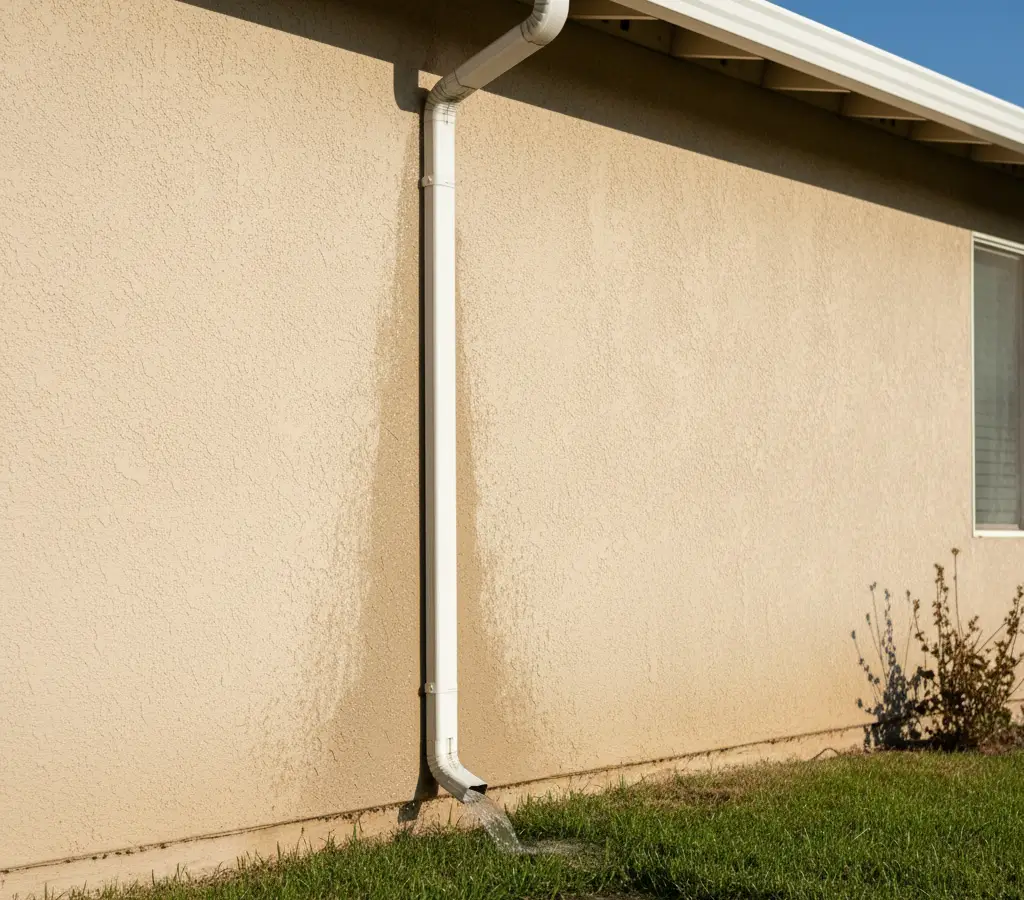
In Folsom, downspouts trap oak debris and sediment that gutters miss. Most clogs hide underground or inside elbows where you cannot see them. We use professional clearing methods and snake tools to break up blockages. Our certified teams test each spout to confirm water exits properly at ground level. This page covers the clearing process, flush testing, and why pre-winter service protects your foundation.
Water overflowing from your gutters during rain often signals a downspout clog. You might see clean gutters but still notice water pouring over the edge. This happens when debris packs deep inside the downspout pipe where you cannot reach it. Homeowners in Empire Ranch and Broadstone with two-story gutters frequently discover this problem after the first heavy storm.
Look for water stains running down your siding below the gutter line. These marks show that water backed up and spilled over instead of flowing through the downspout. You may also notice pooling near your foundation after rain. Folsom’s clay soil does not absorb water quickly, so even small delays in drainage create standing water that threatens your foundation.
Check the ground exit point of each downspout after running a hose into the gutter. Water should flow steadily out of the bottom opening within seconds. If you see slow drips, weak flow, or no water at all, the downspout is blocked somewhere inside the pipe. Many clogs form in elbow joints or underground extensions where acorns, leaf fragments, and roof sediment collect and harden over time.
Catching these hidden clogs before winter storms arrive prevents water from backing up and flooding basement window wells. Early detection also stops staining on siding and protects landscaping near your foundation. We test every downspout during service to confirm proper flow before we leave your property.
Homeowners throughout Folsom depend on our downspout services to stop backups, prevent foundation pooling, and keep their gutters working the way they’re supposed to after heavy rain.
Our team uses safe clearing methods and full water flow testing to confirm every downspout is open, draining, and ready for the next storm. No guesswork, no hidden clogs, just proper drainage you can count on.
Oak trees dominate many Folsom neighborhoods and drop acorns, caps, and leaves year-round. These materials wash off your roof during rain and flow into gutters. While gutter guards may catch large debris, small fragments still pass through and enter the downspout opening. Acorn caps are particularly problematic because their curved shape allows them to wedge into elbow joints and create anchor points for other debris.
Roof sediment adds to the problem. Asphalt shingles shed granules over time, and dust settles on roof surfaces between storms. When rain washes this grit down the roof, it mixes with organic debris in your downspouts. The combination forms a dense paste that hardens inside elbow bends. Folsom’s hillside neighborhoods see faster sediment buildup because rainwater gains speed as it runs down sloped roofs.
Downspout elbows create natural collection points where debris slows down and accumulates. The 90-degree bends force water to change direction sharply. Heavy materials like acorn caps and sediment cannot make the turn at full speed, so they settle at the elbow joint. Over months, these layers build up until they block the entire pipe.
Understanding this pattern helps you schedule clearing before November storms arrive. Properties near mature oaks benefit from twice-yearly service to remove accumulated debris before it hardens. Regular clearing prevents the blockages that cause overflow damage during Folsom’s wet season.
Downspouts clog faster than most homeowners realize, especially with Folsom’s oak debris and spring runoff. Here’s the easiest way to make sure water moves through your system the way it should.
Tell us what kind of drainage issues you’re seeing and we’ll check your downspouts for hidden clogs, slow flow, or blockages that might be backing up your entire gutter system.
Pick a time that works for you. We show up on schedule and clear every downspout, then perform a full flush test to verify smooth, unobstructed drainage.
We confirm your downspouts move water exactly where it belongs. No backups, no overflow surprises, just a home protected from foundation-soaking runoff.
Many homeowners try clearing downspouts by running a garden hose from the top opening. This works for loose debris near the surface, but it cannot break through compacted blockages deeper in the pipe. If you still see slow drainage after flushing from above, the clog sits below the reach of water pressure alone. Professional snake removal targets these stubborn blockages that resist standard clearing methods.
We insert a plumbing snake or auger through the top downspout opening. The rotating cable works its way down the pipe and breaks up hardened debris at elbow joints and bends. Snake tools can navigate tight turns and reach clogs that form several feet below the gutter line. Once the snake breaks through the blockage, we follow up with high-pressure water to flush remaining fragments out of the system.
Many Folsom homes have underground downspout extensions that carry water away from the foundation. Clogs often form in these buried sections where you cannot see or reach them. Professional tools access these below-grade blockages and restore full flow through the entire drainage path. Without proper equipment, these hidden clogs remain in place and cause water to back up during storms.
After clearing the blockage, we run water through the system and verify steady flow at the ground exit point. This flush test confirms that water moves freely through every section of the downspout. We show you the clear flow before finishing the job so you know your drainage system works properly.
Folsom receives most of its annual rainfall between November and March. These winter storms can drop heavy rain in short bursts that overwhelm clogged downspouts. Properties in Parkway and Willow Creek face particular risk because seasonal storms hit quickly and dump large volumes of water in minutes. Pre-winter testing ensures your downspouts can handle these intense flows before the first storm arrives.
We recommend scheduling flow testing in October or early November. This timing gives you a clear picture of your drainage system’s condition before the wet season starts. Testing involves running high-pressure water through each downspout while checking the ground exit point for proper flow. If we find restricted drainage, we clear the blockage immediately so your system works when storms arrive.
Verified flow means water exits several feet away from your foundation every time it rains. When downspouts work properly, they protect your foundation from the pooling that leads to cracks and settling. Folsom’s clay soil compounds this risk because water sits on the surface instead of absorbing quickly. Any delay in downspout drainage creates puddles near your foundation that can cause thousands of dollars in damage.
Testing before winter also reveals problems with underground extensions. These buried pipes carry water even farther from your home, but they fail when roots invade or soil shifts. Early detection allows time for repairs before storms test your system. Fall service gives you confidence that your downspouts will handle whatever weather comes between December and March.
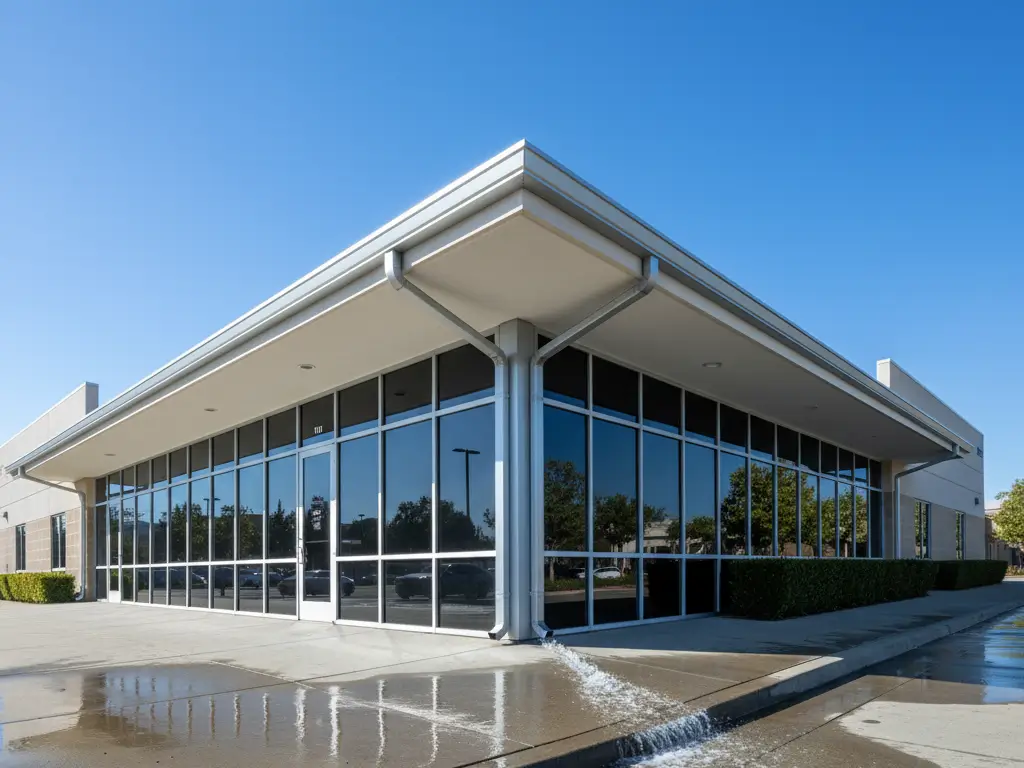
Many homeowners clean their gutters twice a year and assume their drainage system works properly. You scoop out leaves, acorns, and debris from the gutter troughs until they look clean. However, this maintenance only addresses half of your drainage system. Even spotless gutters push fine particles down into downspouts where they settle and create blockages over time.
Small debris like pine needles, acorn fragments, and roof granules pass through your hands during gutter cleaning. These materials are too fine to catch easily, so they wash into the downspout opening with the first rain. Once inside the pipe, they collect at elbow joints and underground extensions. Homeowners who skip downspout flushing discover clogs only after water overflows during a storm.
American River Canyon area homes face additional challenges from fine dust and pollen. This airborne material settles on roofs and mixes with moisture from morning dew or light rain. The combination creates a sticky residue that flows into downspouts and hardens when it dries. Properties near the canyon collect more of this fine sediment than homes in other parts of Folsom.
Gutter cleaning and downspout clearing work together to protect your home. Clearing the troughs removes visible debris, while flushing the downspouts eliminates the fine particles you cannot see. We recommend combining both services during each maintenance visit to ensure complete drainage system function.
Schedule downspout clearing twice per year if you have oak trees near your home. Properties without nearby oaks can schedule service once per year before winter storms arrive. Spring and fall timing works best because it addresses debris buildup from both oak shedding seasons and prepares your system for heavy rain periods.
Yes, we clear downspouts through the top opening using snakes and pressure hoses in most cases. The auger breaks up blockages inside the pipe without requiring removal. We only disconnect downspout sections when clogs sit deep in underground extensions that tools cannot reach from above.
Yes, water pools near your foundation when downspouts fail, which leads to cracks and settling. Clay soil does not absorb water quickly, so overflow from blocked downspouts creates standing water against your foundation walls. This prolonged contact causes structural damage that costs thousands of dollars to repair.
Yes, gutter cleaning removes trough debris but does not clear blockages inside the downspout pipe. Fine particles like roof granules and acorn fragments pass into downspouts during cleaning and create clogs at elbow joints. Both services work together to ensure complete drainage system function.
We run water through each downspout and show you clear flow at the ground exit before finishing. You can see steady water discharge from the bottom opening during our test. This visual confirmation proves that water moves freely through the entire pipe without backup or restriction.
Yes, testing in October or early November prevents overflow damage during heavy December rains. Folsom receives most annual rainfall between November and March, so fall service ensures your system handles intense winter storms. Pre-season clearing gives you confidence that water will drain properly when storms arrive.