

Folsom’s municipal water tests between 150 and 250 parts per million for hardness. The USGS classifies anything above 180 ppm as “very hard.” That mineral load explains why so many homeowners here scrub the same white spots month after month.
You cleaned the windows last spring. The haze came back by summer. At some point, every Folsom homeowner asks whether this fight can actually be won.
The answer depends on how long those stains have been building. It also depends on whether minerals have crossed from surface deposits into actual glass etching. This guide breaks down exactly what determines whether hard water stains can be permanently removed from windows in Folsom homes. If you already know you need help, learn more about our hard water stain removal services in Folsom.
Below, you will learn what causes some stains to become permanent and which removal methods work for each stage. You will also learn when professional help makes the difference between temporary improvement and lasting clarity.
Can hard water stains be permanently removed from windows?
Yes, hard water stains can be permanently removed from windows if treated before minerals etch into the glass. Surface-level deposits typically respond to acidic cleaners, polishing compounds, or pure-water cleaning systems.
However, stains left untreated for 6 to 12 months can chemically bond with the silica in glass. This causes permanent etching that may require glass restoration or full replacement.
The key factor is timing. Fresh deposits under 3 months old usually achieve full permanent removal. Older stains need professional assessment to determine if damage has moved beyond the surface layer.
Not sure which stage your stains have reached?
Why Some Hard Water Stains Become Permanent (And Others Don’t)
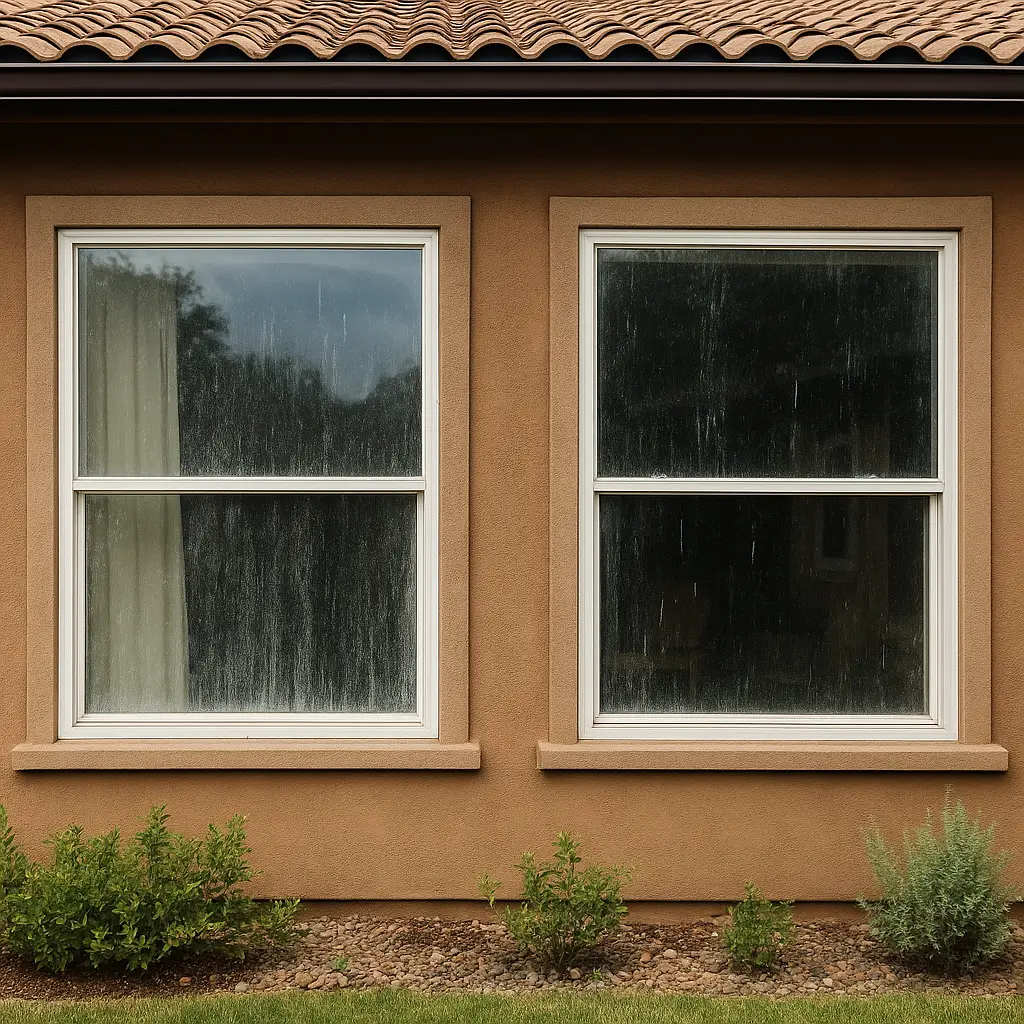
Not all hard water stains are the same. The white haze on your windows might be a surface deposit or actual damage to the glass itself. The difference matters because each problem needs a different fix.
Surface deposits sit on top of the glass. They form when mineral-heavy water dries and leaves calcium and magnesium behind. These deposits can usually be removed with the right cleaners and techniques.
Glass etching is different. When minerals stay on glass long enough, they bond with the silica in the glass itself. At that point, you are no longer cleaning a stain. You are dealing with physical damage to the surface.
Folsom’s water carries calcium carbonate, magnesium, and silica from Sacramento Valley groundwater sources. These minerals build up faster here than in areas with softer water.
Sprinkler overspray speeds up the problem during Folsom’s hot summers. Water hits the glass, evaporates quickly in the heat, and leaves minerals behind. This cycle repeats daily from May through October on many properties.
We see a clear pattern on service calls throughout Folsom. Homeowners who address stains within the first few months almost always get full removal. Those who wait a year or longer often face tougher choices.
| Stain Stage | Time on Glass | Characteristics | Removal Success |
| Fresh | Under 3 months | White film, smooth to touch | High |
| Moderate | 3 to 6 months | Visible haze, slight texture | Good with professional treatment |
| Severe | 6 to 12 months | Cloudy appearance, rough texture | Partial removal likely |
| Etched | Over 12 months | Permanent cloudiness, pitted surface | Glass restoration or replacement |
DIY Methods That Work for Surface-Level Stains
If your hard water stains are recent, you may be able to handle them at home. These methods work best on deposits less than two months old.
White vinegar solution is the most common starting point. Mix equal parts white vinegar and distilled water in a spray bottle. Spray the glass, let it sit for five minutes, then wipe with a soft cloth. The acid in vinegar breaks down calcium and magnesium deposits. This works well for light buildup but struggles with anything more stubborn.
Baking soda paste adds mild abrasion for tougher spots. Mix baking soda with a small amount of water to form a thick paste. Apply with a soft cloth using gentle circular motions. Rinse thoroughly when finished. One caution: do not use this method on coated or tinted glass. The abrasion can scratch protective films.
Commercial hard water removers like CLR or Bar Keeper’s Friend offer stronger cleaning power. Before using any commercial product, check the label for glass safety. Test on a small corner first. Some products contain acids that can damage window frames, seals, or nearby surfaces.
Technique matters as much as product choice. Always use soft cloths or non-scratch pads. Work in circular motions rather than back and forth. Rinse the glass completely to prevent new deposits from forming as the cleaner dries.
Here is an honest take on DIY limits. These methods handle fresh deposits and ongoing maintenance well. They rarely achieve permanent removal on stains older than a few months. If vinegar and elbow grease are not producing results, the minerals have likely bonded deeper than home methods can reach.
- Vinegar solution: Effective on stains under 2 months
- Baking soda paste: Effective on stains under 2 months (avoid coated glass)
- Commercial cleaners: Effective on stains under 3 months with repeated application
- All DIY methods: Limited effectiveness beyond 3 months

When Professional Hard Water Stain Removal Makes Sense
DIY methods have limits. When home cleaning stops working, professional treatment becomes the practical next step.
Signs your stains need professional attention:
- Haze returns within days of cleaning
- The glass feels rough or textured to the touch
- Vinegar produces no visible change after multiple attempts
- Stains have been building for more than three months
- White spots appear in the same places no matter how often you clean
Professional window cleaning uses tools and products not available at hardware stores. Polishing compounds designed for glass can remove mineral buildup that household cleaners cannot touch. Buffing equipment applies these compounds evenly without scratching the surface.
Pure-water fed pole systems take a different approach. These systems filter water through multiple stages until nearly all minerals are removed. When deionized water dries on glass, it leaves nothing behind. This prevents new deposits from forming during the cleaning process itself.
Sometimes the damage goes beyond what cleaning can fix. Glass restoration uses specialized abrasives to remove a thin layer of the glass surface along with the etched minerals. This works for moderate etching but adds cost. Severe etching may require window replacement, which is why early treatment saves money in the long run.
On Folsom service calls, we typically see good outcomes when homeowners reach out in the moderate stage. Stains in the 3 to 6 month range usually respond well to professional polishing. Once stains pass the 12 month mark, results become less predictable and restoration costs increase.
Ready to find out where your stains fall?
Folsom-Specific Factors That Affect Your Results
Where you live in Folsom affects how fast hard water stains develop and how difficult they become to remove.
Sacramento Valley water sources carry different mineral loads depending on the neighborhood. Some areas pull more heavily from groundwater with higher calcium content. Others receive water that has traveled through more treatment stages. The American River influences local groundwater throughout the region, adding its own mineral signature to the mix.
Seasonal patterns play a major role. Folsom’s peak staining season runs from May through October. This matches the months when irrigation systems run most often. Daily sprinkler cycles during hot weather create the perfect conditions for mineral buildup. Water hits warm glass, evaporates fast, and deposits minerals with each cycle.
Folsom’s Mediterranean climate makes the problem worse. The region receives almost no rain from late spring through early fall. In areas with regular rainfall, storms rinse windows naturally and slow mineral accumulation. Here, months pass without any natural cleaning. Minerals stack up layer by layer with nothing to wash them away.
Local irrigation setups cause chronic problems on many properties. Pop-up sprinkler heads aimed too close to the house spray windows daily. Drip systems placed near foundations splash during watering cycles. Overspray from lawn zones reaches second-story windows more often than homeowners realize. These patterns repeat hundreds of times each summer before anyone notices the buildup.
The combination of hard water, dry climate, and heavy irrigation makes Folsom a challenging environment for keeping windows clear. Understanding these local factors helps explain why stains form faster here than in other regions.

How to Keep Results Permanent After Removal
Removing hard water stains is only half the job. Keeping them gone requires changes to what caused them in the first place.
Sprinkler adjustment is the single most impactful step. Walk your property while the irrigation runs. Watch where water lands on windows, siding, and glass doors. Redirect any heads that spray toward the house. Lower pop-up sprinklers that arc too high. This one change prevents more stain recurrence than any cleaning product ever could.
Protective coatings add a second layer of defense. Hydrophobic treatments cause water to bead up and roll off glass instead of drying in place. These coatings reduce mineral adhesion and make regular cleaning easier. Professional-grade options last longer than consumer sprays and provide better protection in hard water areas like Folsom.
Maintenance cleaning frequency matters. In areas with soft water, annual window cleaning may be enough. Folsom’s mineral load calls for more attention. We recommend quarterly professional cleaning to prevent buildup from reaching the bonding stage. This schedule keeps stains in the easy-to-remove category year-round.
Squeegee technique helps between professional visits. After adjusting sprinklers, some overspray may still reach your windows. A quick squeegee pass within an hour of irrigation removes water before minerals dry on the glass. This takes less than five minutes and stops the stacking effect that creates stubborn stains.
The most overlooked prevention step we see on Folsom service calls is checking sprinkler coverage after seasonal adjustments. Many homeowners set their systems in spring and never revisit them. Heads shift, pressure changes, and spray patterns drift toward the house without anyone noticing.
Prevention steps in priority order:
- Adjust sprinklers to eliminate window overspray
- Apply a professional hydrophobic coating after cleaning
- Schedule quarterly maintenance cleaning
- Squeegee windows after irrigation if overspray occurs
- Recheck sprinkler coverage each season
Ready to start fresh with clear windows that stay that way?