

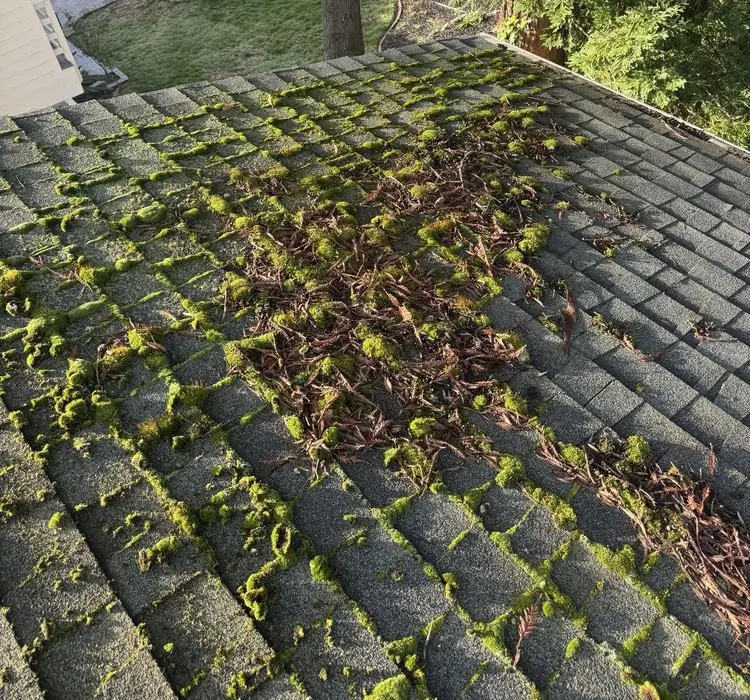
Moss grows on Folsom roofs that sit under tree shade for most of the day. Homes along the American River Parkway trail, near Lake Natoma, and in older neighborhoods with mature oak canopies see it the most. Moss holds moisture against your shingles around the clock. That constant dampness breaks down the protective granule layer and shortens your roof’s lifespan by years.
The damage is not always visible from the ground. Moss roots grow into the tiny gaps between shingle layers and lift the edges. Water follows those lifted edges underneath during rain. By the time you notice a water stain on your ceiling, the decking below your shingles may already be soft and rotting.
We remove roof moss using soft washing that kills the growth at the root without high pressure. Our pressure washing service in Folsom includes low-pressure treatments designed for tile, composition, and flat roof materials. No granule loss. No broken tiles. Same-week scheduling is available for Folsom homeowners who need fast treatment before the rainy season starts.
Professional low-pressure washing is the fastest way to remove roof moss in Folsom. A trained crew clears moss in one visit using soft wash equipment and eco-safe cleaning agents. Results are immediate with no damage to shingles or tiles.
Moss affects each roofing material differently. On composition shingles, moss roots work under the edges and peel back the tabs. The granule layer scrapes off where the moss grips. Once those granules are gone, UV exposure and rain break down the bare asphalt underneath. A shingle that should last 25 years fails in 15.
Tile roofs in neighborhoods like Broadstone and Lexington Hills handle moss differently. The moss sits in the overlap joints where tiles stack. It holds water in those joints and creates a path for moisture to reach the underlayment. The tiles themselves don’t rot, but the felt paper and decking beneath them do. By the time a tile is lifted during inspection, the wood underneath may already be spongy.
Flat roof sections on Folsom homes collect moss along drain edges and low spots where water pools. The moss traps debris and blocks drainage. Standing water adds weight and accelerates membrane breakdown. A flat roof repair for water damage runs $1,500 to $5,000 depending on how far the damage has spread before it was caught.
Oak canopy traps moisture on shaded slopes while fall rain feeds moss growth. We remove the moss and treat your roof so it stays protected through every season.
We clear every patch in one visit using low-pressure soft washing. No shingle damage. No callbacks.
We match our pressure and cleaning agents to your roof type. Safe results with no risk to your warranty.
The best window for roof moss removal in Folsom falls between late April and early June. This timing works because the Sacramento Valley wet season runs from November through March. That rain feeds moss growth all winter long.
By late April, the last storms have passed and your roof can dry out. Dry conditions let cleaning agents work better on the moss. They also help preventive coatings bond to your roofing material and last longer.
Waiting until summer brings a different problem. Once Valley heat sets in, moss dries out and hardens on the surface. Dried moss is harder to remove and takes more time on the roof. Scheduling in late spring gives our crew the best conditions to get a clean result in one visit.
If you missed the spring window, fall is the next best option. Treating your roof before the first November rains stops new moss from taking hold during the wet months ahead.
Getting rid of roof moss in Folsom takes the right method, not just muscle.
Tell us about your roof and we send a clear estimate. Same-week scheduling available.
Pick a date that works for you. Our crew handles everything in one visit using low-pressure soft washing.
Moss is gone and a preventive coating keeps it from coming back for up to 12 months.
Many Folsom homeowners worry that cleaning their roof could cause more harm than good. That concern makes sense. The wrong method can crack tiles, strip granules, or force water under shingles. Safe moss removal starts with using the right pressure for your roof type.
Low-pressure soft washing lifts moss from the surface without blasting your roofing material. We apply a biodegradable cleaning solution first. It breaks the moss loose at the root so it releases without heavy scrubbing or high-pressure spray. The moss comes off and the roof stays intact.
Roof type matters when choosing a removal method. Many homes in Empire Ranch and Natoma Station have composite shingle roofs. These shingles lose protective granules quickly under standard pressure washing. They need a gentler approach than concrete tile roofs, which can handle slightly more pressure. We adjust our equipment and technique based on what your roof is made of.
After cleaning, we inspect the surface for any cracked or lifted areas. Catching small problems during a moss removal visit can save you from a bigger repair later. Your roof stays clean and your shingles stay sealed against the next rain.
Some companies rely on chemicals alone to treat roof moss. Others blast it off with standard pressure washers. Neither approach gives you a complete result in one visit. Low-pressure soft washing combines both steps for a faster, safer clean.
Our crew applies a biodegradable cleaning agent that kills moss at the root. Then we rinse the surface with low-pressure water to wash the dead moss away. The combination removes what you can see and what is growing underneath. Your roof looks clean the same day, and the treatment keeps working after we leave.
One detail that matters in Folsom is hard water. The local water supply carries mineral deposits that can leave white streaks on dark shingles after rinsing. Our crew uses filtered rinse water to prevent that residue. You get a clean roof without trading green moss patches for chalky white lines.
Soft washing also protects your landscaping below. Because we use low pressure and eco-safe agents, runoff does not damage plants, grass, or soil around your foundation. The cleaning solution breaks down naturally and leaves nothing harmful behind.
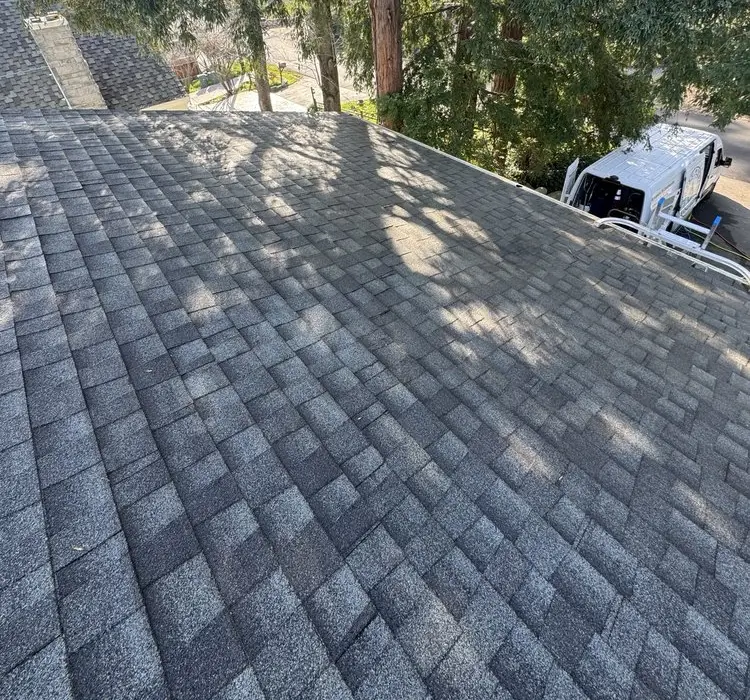
A clean roof looks great, but moss can return within months in certain parts of Folsom. Removing what is there today is only half the job. Without a preventive treatment, spores settle back on your roof and start growing again as soon as moisture returns.
After cleaning, we apply a zinc or copper-based inhibitor to your roof surface. This coating creates a barrier that slows moss regrowth for up to 12 months. When rainwater hits the treated surface, it carries trace amounts of the inhibitor across your shingles. That keeps new spores from taking hold between cleanings.
Properties along Folsom Lake and the Humbug-Willow Creek corridor sit in high-humidity microclimates. Morning fog and cooler air near the water keep roof surfaces damp longer than homes on higher ground. Without a preventive coating, these roofs can show new moss growth in as little as three to four months after cleaning.
The inhibitor we use is safe for your roof, gutters, and the plants around your home. It works quietly in the background between service visits. For homeowners in shaded or high-moisture areas, a preventive application turns a one-time cleaning into longer-lasting protection.
Scraping moss off your roof with a putty knife or stiff brush seems like a simple weekend project. In practice, it causes more problems than it solves. Manual scraping tears shingle edges, gouges tile surfaces, and pulls granules off composite roofing. That damage shortens your roof’s life and can void the manufacturer’s warranty.
Household bleach is another common DIY choice. Bleach kills moss on contact, but it also runs off your roof and into your gutters, downspouts, and flower beds. That chemical runoff damages plants and can corrode metal gutter systems over time. A garden hose does not provide enough pressure to fully remove dead moss, so it stays on the roof and clogs your drainage.
The bigger risk is personal safety. Steep-pitch roofs common in Folsom’s newer Parkway and Mangini Ranch developments make footing difficult even in dry conditions. Wet moss on a sloped surface is extremely slippery. California OSHA fall protection rules apply to roof work above certain heights for good reason. A fall from a two-story roof can result in serious injury.
Hiring a trained crew removes the guesswork, the risk, and the chance of making expensive damage worse. You stay on the ground while the moss comes off the right way.
Most single-story roofs take 2 to 4 hours from start to finish. Two-story homes may need a full morning depending on roof size and how heavy the moss growth is. The process includes applying a cleaning solution, letting it work into the moss roots, rinsing with low-pressure water, and applying a preventive coating. We clean up all debris from your gutters and ground areas before we leave.
Not usually, as long as you catch it early. Moss holds moisture against your roofing material, but the underlying structure often stays sound if you remove the growth before it spreads too far. Our crew inspects the surface during cleaning and will let you know if we spot any areas where moisture has already caused deeper damage. Early removal saves you from the costly repairs that come with long-term neglect.
Some insurers flag untreated moss as deferred maintenance on inspection reports. Many California insurance companies now use drone flyovers to check the condition of your roof without sending an adjuster to your door. Moss, debris, and visible damage all show up clearly in aerial photos. Removing moss and keeping records of the service documents responsible upkeep for your policy. If you are selling your home, a clean roof with service records can also prevent issues during the buyer’s inspection. We provide written confirmation of every moss removal visit for your files.