

Folsom homeowners with solar panels lose 15-25% efficiency when panels go uncleaned for six months or longer. You invested thousands to cut energy bills. But dirty panels cost you money every month. This solar payback guide breaks down how system efficiency directly affects long term savings and return on investment, which is why staying ahead of dirt buildup is so important for Folsom homeowners.
This guide answers how often should I clean my solar panels in Folsom with a schedule built for our local weather. Our dust patterns and pollen seasons are different from other California cities. You need a plan that works here.
We’ll cover the recommended cleaning frequency for Folsom homes. You’ll learn what local factors speed up dirt buildup. We’ll show you warning signs that mean your panels need attention between scheduled cleanings.
Clean panels produce more power. More power means lower bills. We’ve cleaned our fair share of solar arrays across Folsom. We know what works in our climate.
Your panels sit on your roof collecting Valley dust and oak pollen. Rain doesn’t wash it away during our dry summers. A regular cleaning schedule keeps your system running at peak output. You protect your investment and maximize your savings.
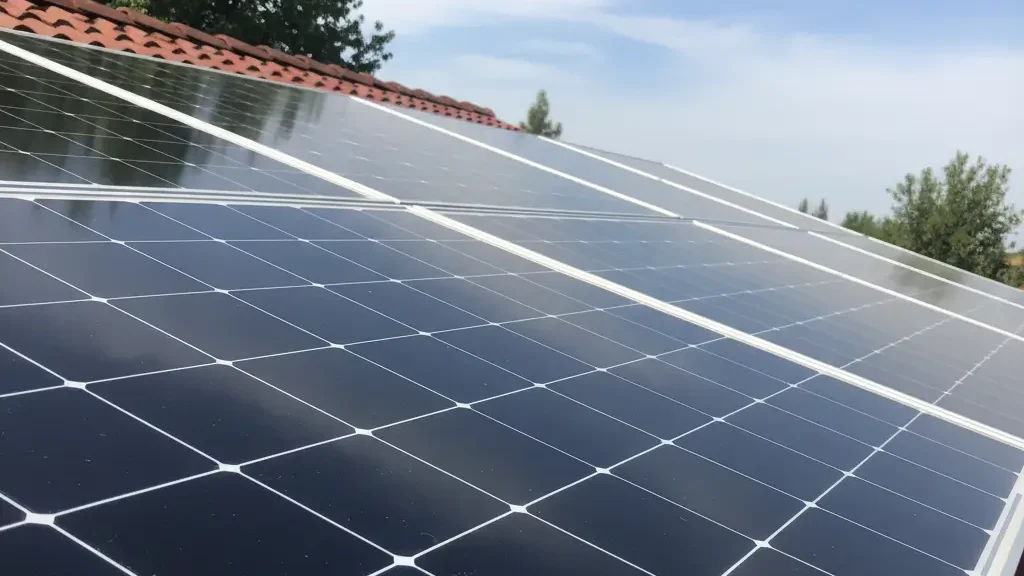
How often should solar panels be cleaned in Folsom?
Most Folsom homeowners should clean their solar panels 2-4 times per year. The ideal schedule depends on your location and conditions:
- Standard schedule: Every 6 months (spring and fall)
- High pollen or dust areas: Every 3-4 months
- Near construction or farmland: Quarterly cleaning recommended
- Minimal shade, low dust: Every 6-8 months may suffice
Folsom’s Mediterranean climate means less rain in summer months (May through September). This is when dust accumulates fastest on your panels.
In our eight years servicing Folsom panels, we’ve found the April-May pollen season and October leaf drop create the heaviest cleaning needs. Spring oak pollen leaves sticky films. Fall brings cottonwood debris that can shade entire sections.
Without summer rain to rinse your panels, efficiency drops quickly during our hottest months when you need maximum output.

Recommended Cleaning Schedule for Folsom Solar Panels
Most Folsom homes do well with bi-annual cleaning. We recommend late April (after pollen season) and October (before winter storms). This covers the two biggest debris periods in our area.
High-dust locations need more frequent attention. If you live near Folsom Boulevard, active construction zones, or agricultural areas, plan for every three to four months. Dust and dirt accumulate faster in these spots.
Commercial systems require closer monitoring. Larger arrays mean more revenue loss from dirty panels. We recommend monthly visual inspections and quarterly professional cleaning at minimum. This keeps production consistent and catches problems early.
New installations get a grace period. Your first six months may not require cleaning depending on when you installed. Spring installations face immediate pollen buildup. Fall installations may stay clean through winter with our rain.
The monitoring-based approach works best. Check your system output monthly through your monitoring app. When efficiency drops five percent or more compared to clean periods, schedule a cleaning. This catches problems before they cost you serious production.
Your panels work hardest in summer when we need cooling. June through September brings maximum sun but also maximum dust with no rain to wash it away. Clean panels in May give you peak performance during your highest usage months.
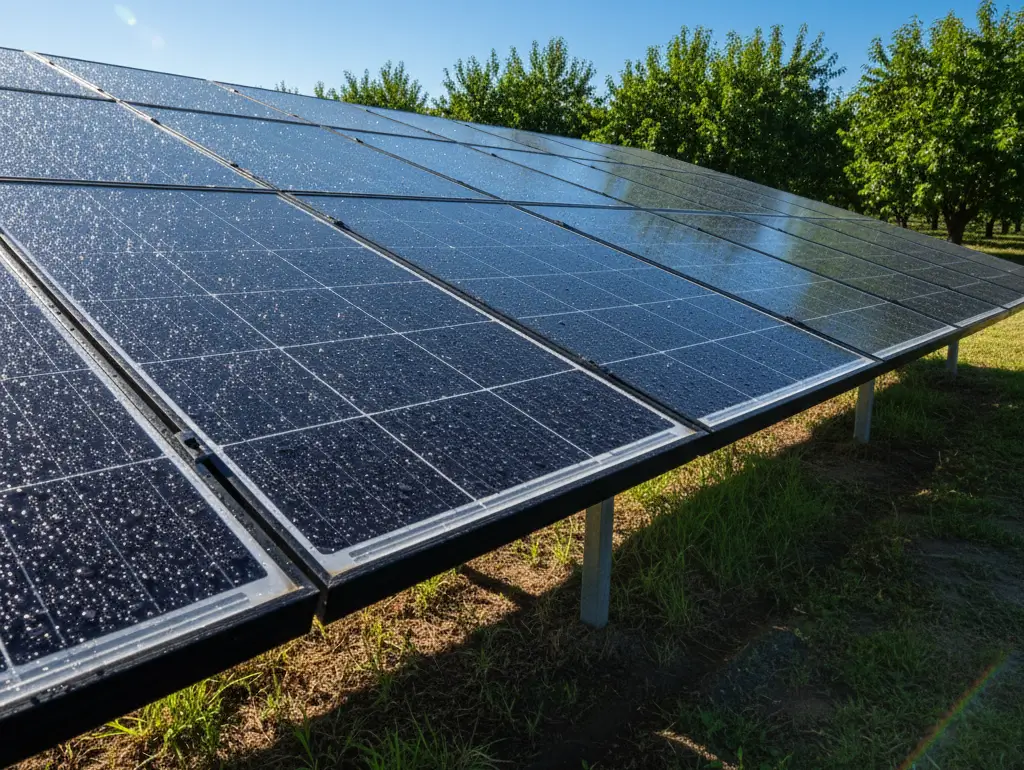
Why Folsom’s Climate Affects Your Cleaning Frequency
Folsom averages only one to two inches of rain from May through September. Coastal California gets more summer moisture. We don’t. Your panels sit dirty for months without natural rinsing.
Spring pollen season hits hard here. Oak and olive trees coat everything in yellow-green film during April and May. This pollen is sticky. Morning dew makes it cling to your panels. Rain alone won’t remove it once it sets.
The American River creates heavy morning dew in nearby neighborhoods. Dew attracts airborne dust particles. They stick to damp panel surfaces. By afternoon the moisture evaporates but the dust stays behind.
Summer heat bakes debris onto your panels. When temperatures hit 90 to 100 degrees or higher, dirt literally cooks onto the glass. Panels that could have been cleaned easily in May become much harder to restore in August.
Fall brings its own challenges. Cottonwood trees shed fluffy debris. Valley oaks drop leaves and acorns. This material can shade entire panel sections if left to accumulate. Even small amounts reduce your output.
We’ve had Folsom clients near the Folsom Lake area report needing quarterly cleaning due to agricultural dust. Properties closer to the Granite Bay border manage with twice yearly cleaning. Your exact location matters.
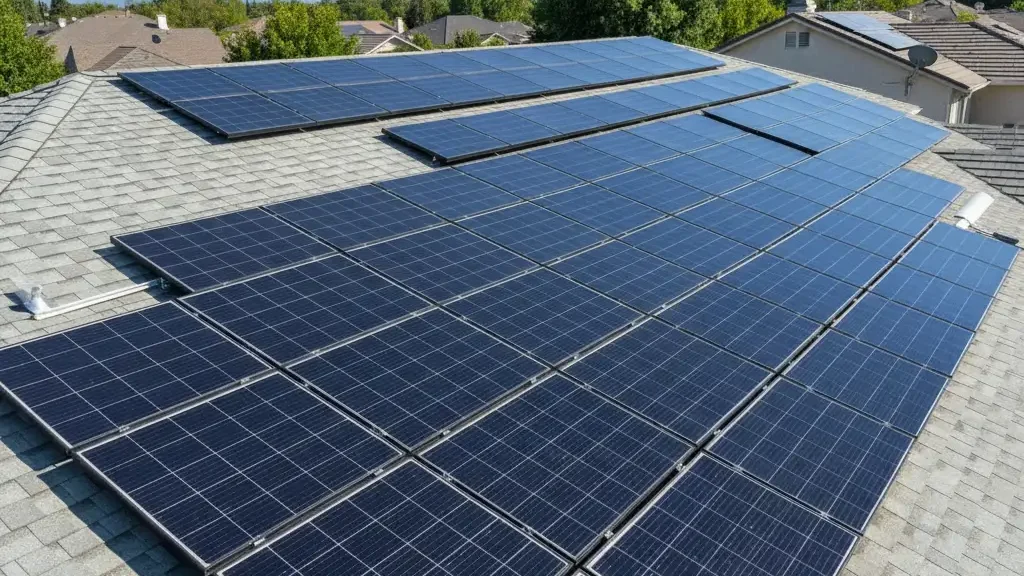
Signs Your Panels Need Cleaning Sooner Than Scheduled
Visible buildup means it’s time to clean. Stand in your yard and look at your panels. If you can see dust, pollen, or bird droppings from the ground, your panels are already losing efficiency.
Your monitoring system tells the truth. A five percent or higher drop in output compared to previous months signals dirty panels. Make sure you’re comparing similar weather conditions. Cloudy weeks naturally produce less than sunny ones.
Wildfire smoke events require immediate attention. Sacramento region fires are becoming more common. Smoke deposits ash and particles that block sunlight. Even light smoke leaves residue that hurts your production.
Morning sunlight reveals hidden problems. Walk outside when sun hits your panels at an angle. White haze or film becomes visible in angled light. This coating blocks energy production even when panels look clean from below.
Construction activity nearby means extra cleanings. Road work stirs up dust that settles on everything. New home construction in your neighborhood creates constant dirt clouds. Your panels catch all of it.
Check after major windstorms. Valley winds carry dust from miles away. One strong wind event can coat your entire array. A quick visual inspection after big storms tells you if cleaning is needed.
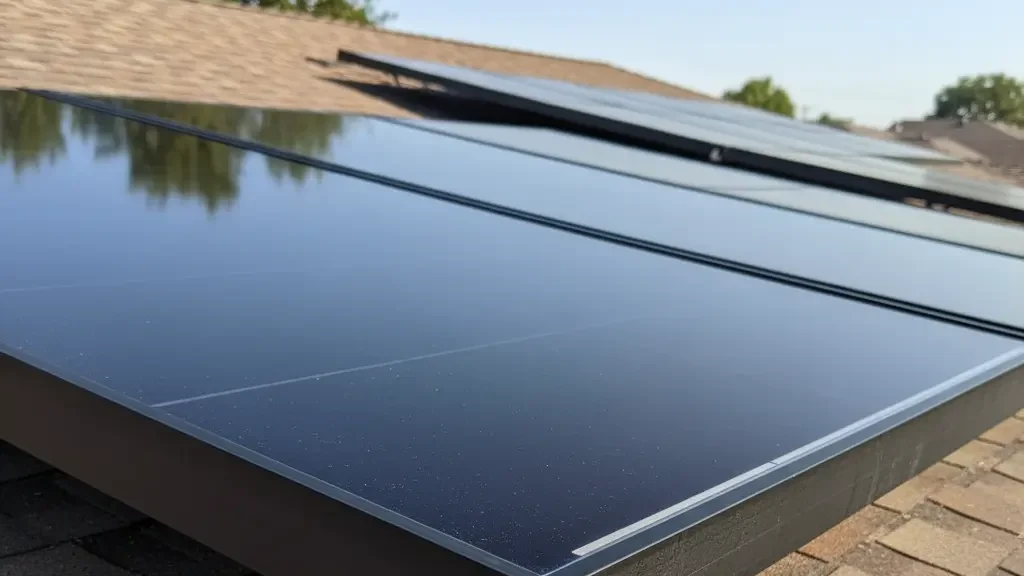
Professional vs. DIY Solar Panel Cleaning in Folsom
DIY cleaning carries real risks. Most Folsom homes are two-story. Getting on your roof safely requires proper equipment and experience. One slip can mean serious injury. You also risk voiding your warranty if you use wrong cleaning agents or techniques.
Professional services offer major advantages. We use deionized water systems that prevent water spots. Tap water leaves mineral deposits that can actually make panels dirtier. Our insured technicians handle all roof access safely. We verify your efficiency improvement after cleaning. Most jobs take 45 minutes versus two to four hours for DIY attempts.
DIY makes sense in specific situations. Single-story homes with easily accessible arrays work for homeowners comfortable with heights. Some clients do quarterly touch-ups between our professional deep cleans. This keeps panels reasonably clean year-round.
Cost comparison matters. DIY supplies run $30 to $60 per cleaning for brushes, cleaner, and equipment. Professional cleaning costs $150 to $300 depending on system size. The difference is expertise and results.
Professional techniques extend time between cleanings. Our deionized water and proper methods leave panels cleaner longer. DIY cleaning with tap water often creates spots that attract more dirt faster.
See our residential cleaning plans for packages that fit your schedule and budget.
DIY vs. Professional Comparison:
| Factor | DIY | Professional |
| Cost per cleaning | $30-60 supplies | $150-300 service |
| Time required | 2-4 hours | 45 minutes |
| Safety Risk | High (roof access) | None (insured team) |
| Water spots | Common with tap water | Eliminated with deionized water |
| Warranty Protection | May void warranty | Maintains warranty |
| Results longevity | 1-2 months | 3-6 months |

Creating Your Folsom Solar Panel Cleaning Schedule
Mark your calendar for bi-annual baseline cleanings. Late April works best for spring cleaning after oak pollen season ends. October gives you clean panels before winter storms arrive. These two dates cover the biggest debris periods.
Set a monthly reminder to check your monitoring system. Compare current output to previous months with similar weather. A drop of five percent or more means your panels need attention. This catches problems between scheduled cleanings.
Take photos of your panels every three months. Walk around your property and photograph your array from different angles. Compare photos over time. Visible dirt buildup shows up clearly in photo comparisons.
Consider a hybrid approach for best results. Professional service in spring and fall handles deep cleaning. DIY spot-cleaning mid-cycle keeps panels reasonably clean. This balances cost with performance.
Your location and local conditions determine your exact needs. But this schedule works for most Folsom homes.
Ready to maximize your solar output? Schedule your free estimate with Folsom’s trusted solar cleaning experts.
Call (916) 404-0288